
BENZ supports East India across Jamshedpur, Bhubaneswar, Kalinganagar-linked corridors, Kolkata-Haldia routes, and Guwahati gateway movement with reinforced wooden pallets, plywood boxes, and heavy-duty skids built for dense metal loads, higher humidity, and longer transit cycles.
Across East India, the right wooden packaging usually starts with structural strength. Steel, mining, heavy-engineering, and infrastructure-linked cargo often creates higher point loads and rougher logistics conditions than lighter manufacturing belts. At the same time, humidity and longer route times make it useful to combine the wood structure with corrosion and moisture-control materials where needed.
Service-area note: This East India page maps BENZ support across steel, project-cargo, and industrial corridors such as Jamshedpur, Bhubaneswar, Kalinganagar, Kolkata-Haldia, and Guwahati. It does not claim branches in every listed city; the page is a regional service-coverage guide built around route complexity, heavy-load handling, and export-pack planning.
East India packaging has to work through a difficult mix of load and route. Jamshedpur and allied steel-auto belts move dense metal components and industrial hardware. Odisha-linked corridors around Bhubaneswar and Kalinganagar add heavy engineering and mining equipment movement. Guwahati and wider northeast gateway routes introduce longer, weather-exposed transport cycles where poor packaging degrades quickly.
BENZ addresses that with reinforced pallets and skids for dense cargo, plywood or mixed-construction boxes where cleaner enclosures are useful, and integrated wood-plus-VCI or desiccant systems where rust, humidity, and storage exposure are part of the actual route risk.
BENZ supports East India across Jamshedpur, Bhubaneswar, Odisha industrial corridors, Kolkata-Haldia-linked routes, and Guwahati gateway movement with wooden formats chosen for actual load behavior and route stress rather than low-cost commodity sizing.
Where metal cargo or longer storage cycles raise protection risk, wooden packs can be combined with VCI paper, desiccants, barrier layers, and internal cushioning as part of one coordinated packaging plan.
Heat-treated solid wood pallets for export loads that need stronger runner construction, forklift access, and correct phytosanitary marking.
Useful for cleaner assemblies, lower tare weight, and export packs where plywood panel construction is a better fit than full timber boxing.
Collapsible formats for organized internal logistics, repeat movement, faster assembly, and flatter empty storage.
Base structures for machinery, dense fabricated loads, and project cargo where load distribution and lifting-point control matter.
Solid wood members used for export packaging require correct ISPM-15 treatment and marking. Plywood panels are exempt, but any solid wood runners, battens, or pallet members still need compliant treatment when used in export packs.
These location pages map local industrial demand, but the core BENZ wooden packaging range stays anchored to the main product pages below. Use these links when you need full product specifications, structural format details, and the right base starting point for pallets, boxes, or returnable wooden systems.
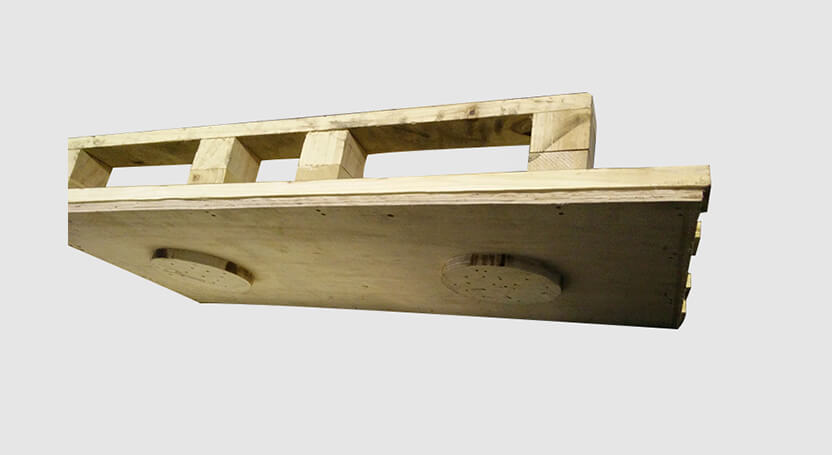
For 2-way and 4-way forklift entry, repetitive industrial dispatch, dense auto or engineering loads, and export programs that still need solid-wood strength with compliant treatment and marking.
View Full Specs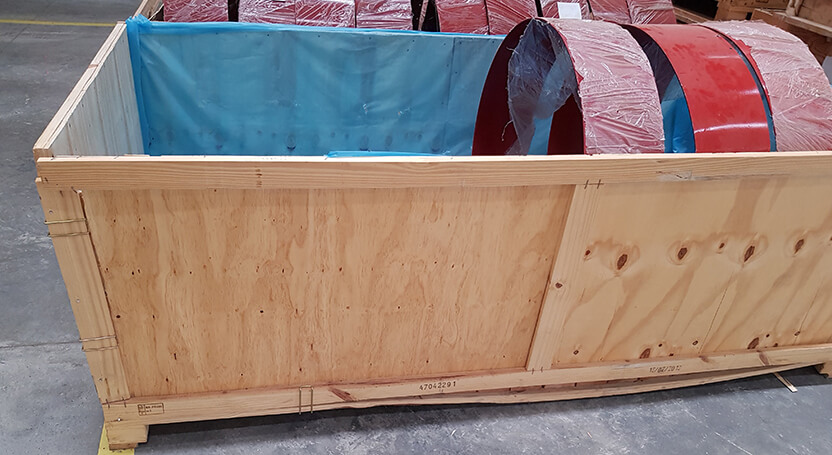
Used where buyers need lower tare weight, cleaner presentation, lower splinter risk, and an enclosed export format that suits machinery parts, electronics, assemblies, and mixed industrial cargo.
View Full Specs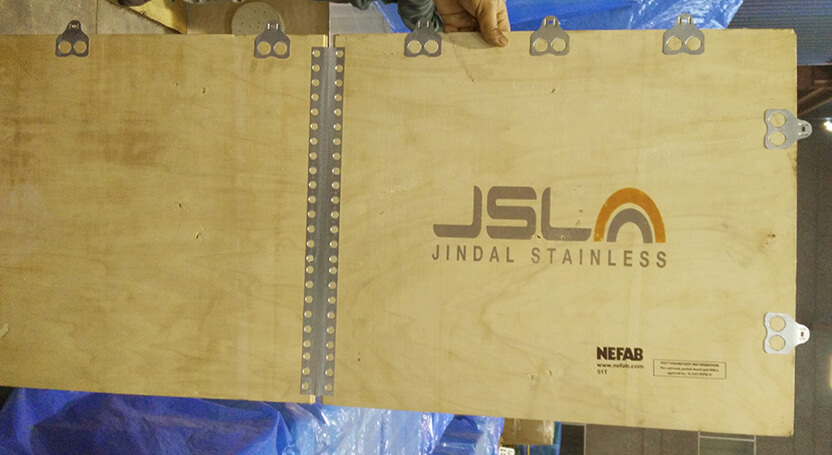
Best for return loops, CKD movement, faster assembly, flatter empty storage, and organized industrial logistics where reuse, knock-down transport, and cleaner handling matter commercially.
View Full Specs
Useful where the shipment needs a sturdier solid-wood enclosed structure for industrial spares, fabricated parts, heavier components, or routes where a box format works better than an open pallet.
View Full SpecsUseful where steel, mining, and equipment cargo can break ordinary pallets through sheer point loading.
The structural design accounts for rougher inland movement and weather exposure before final delivery or export.
Plywood and mixed packs suit electrical or precision assemblies better than open timber alone.
BENZ can combine wood structures with VCI and moisture-control materials when the route demands it.
Dense metal and equipment loads usually need reinforced pallets, skids, or skid-based crates. Lighter assemblies may use plywood or mixed-construction boxes, especially where a cleaner enclosure is useful.
Yes. BENZ supports the wider East India belt with packaging chosen around real cargo density, route conditions, and whether the shipment is domestic heavy movement or export-bound cargo.
Yes. Solid wood export packaging requires proper treatment and marking. Plywood panels are exempt, but structural timber members are not.
A heavy skid is preferable when the cargo has high point loading, uneven geometry, concentrated center mass, or handling conditions that would over-stress a normal pallet.
Yes. This is often useful for metal components, longer storage cycles, humid movement, and export routes where atmospheric corrosion risk matters.
Yes. BENZ supports heavy-duty skids, saddles, and enclosed wooden crate execution for industrial equipment and project cargo.
No. This is a regional service-coverage page for East India. It explains how BENZ supports routes across Jamshedpur, Bhubaneswar, Kalinganagar, Kolkata-Haldia, Guwahati, and related industrial zones without pretending that every location is a standalone BENZ office.
Share the load type, weight, route, and whether you need pallets, plywood boxes, nailess packs, heavy skids, or full export crates. BENZ will recommend the right structure and compliance path.
Request a Packaging Assessment