Home>Anti-Corrosion>VCI Film>Global Industrial Hubs>Yokohama

VCI Film Manufacturer for Yokohama, Japan - Corrosion Protection for Automotive OEM, Shipbuilding, and the Keihin Hub

BENZ manufactures extraordinary VCI film for Yokohama and the vast Keihin Industrial Zone—providing unyielding corrosion defense for massive automotive export networks (Nissan, Isuzu), heavy maritime shipbuilding, and advanced robotics against the relentless Tokyo Bay salt spray and severe late-summer typhoons.
40+
Years Experience
9
VCI Film Types
MIL
PRF-22019E Focus
Global
Manufacturing Support

What Is VCI Film and How Does It Prevent Corrosion?

VCI (Volatile Corrosion Inhibitor) film is a co-extruded packaging plastic engineered with high-tech corrosion-inhibiting compounds embedded within its layers. When complex automotive drivetrains, massive marine diesel engines, or delicate mechatronics are sealed inside, VCI molecules safely vaporize, forming a molecular-thin layer of protection on every exposed surface. BENZ VCI Film employs a proprietary 3-layer co-extrusion process — absolutely essential for navigating Yokohama's unique maritime environment. Built entirely along the coast of Tokyo Bay on massive reclaimed land (umi-shibaura), Yokohama's manufacturing footprint is constantly bombarded by marine aerosol (chloride salt spray). During the intense summer monsoon and typhoon season (Tsuyu and Taifu), relative humidity hits near 100% while driving saltwater penetrates deep into staging yards. Traditional rust-preventative dipping is often insufficient because the heavy driving rain simply washes off the oil.

Why Do Yokohama Manufacturers Choose BENZ VCI Film?

Proprietary 3-Layer Co-Extrusion

BENZ VCI Film uses a proprietary 3-layer blown co-extrusion process: inner protection layer, middle VCI reservoir, and outer atmospheric barrier — delivering sustained corrosion protection for up to 3 years.

Multi-Metal Protection

Single film protects ferrous steel, stainless steel, aluminum, copper, brass, and zinc simultaneously — eliminating the need for separate packaging materials per metal type.

Nine Specialized Film Formats

Multimetal, Stretch, Shrink, Bubble, Anti-Static, Bio-Film, Woven Fabric, Non-Woven, and Enviro — matched to equipment size, metal mix, and transit severity.

Global Compliance Stack

MIL-PRF-22019E, NACE TM0208, ASTM D1748-02, JIS Z 1535, TRGS 615, RoHS, REACH, and FDA for equipment packaging — accepted by defense, automotive, and aerospace buyers worldwide.

BENZ VCI Film Product Range

For Yokohama's intensive industrial zone, BENZ VCI Shrink Film weather-proofs multi-ton shipbuilding assemblies staged directly on the Tokyo Bay docks. BENZ VCI Stretch Film wraps the colossal output of Nissan and Isuzu automotive parts. BENZ Multimetal VCI Film complies with stringent JIS Z 1535 standards for Japanese precision engineering exports.

BENZ Multimetal VCI Film

BENZ Multimetal VCI Film

3-Layer Co-Extruded

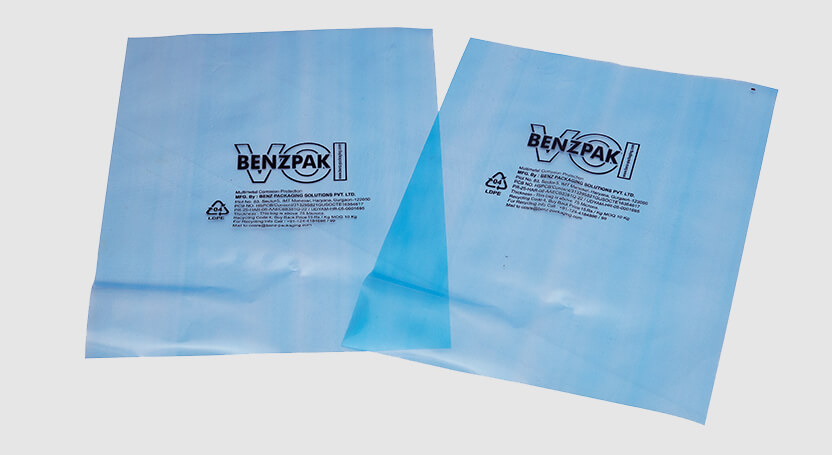
High-technology co-extruded blown film protecting ferrous and non-ferrous metals simultaneously. Available in sheets, rolls, 2D bags, and 3D bags.

View Full Specs
BENZ VCI Stretch Film

BENZ VCI Stretch Film

Hand & Machine Grade

Co-extruded stretch film with multi-metal VCI protection for pallet wrapping, bundling, and automated packaging lines. 9-55 micron range.

View Full Specs
BENZ Anti-Static VCI Film

BENZ Anti-Static VCI Film

ESD + VCI Protection

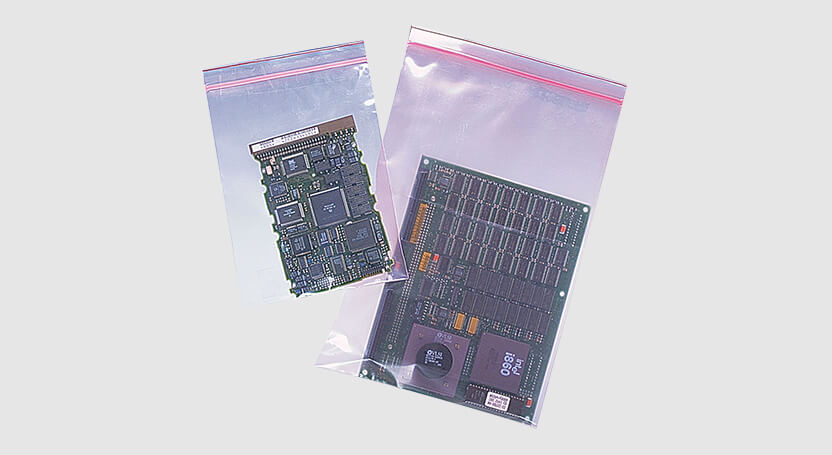
Dual-action film meeting stringent anti-static standards while providing multi-metal corrosion protection for electronics and precision components.

View Full Specs
BENZ VCI Shrink Film

BENZ VCI Shrink Film

Heat-Shrink + UV

High-strength shrink film with UV stabilizers and multi-metal VCI for tight-fit encapsulation of machinery, equipment, and outdoor-stored metal goods.

View Full Specs

How Does VCI Film Protect Metal Parts?

  1. Sealed enclosure: BENZ VCI Film is heat-sealed, stretch-wrapped, or shrink-fitted around the metal part or pallet, creating a sealed microenvironment that traps VCI molecules inside.
  2. Vapor saturation: The middle reservoir layer continuously releases VCI molecules into the enclosed airspace, saturating every surface — including threads, bores, cavities, and recesses that liquid coatings cannot reach.
  3. Active corrosion blockade: VCI molecules adsorb onto metal surfaces and form an invisible molecular shield that interrupts the electrochemical reaction between metal, moisture, and oxygen — stopping rust, tarnish, and white corrosion.
  4. Clean removal: When the film is opened or removed, VCI molecules dissipate within minutes. Parts are immediately ready for assembly, painting, inspection, or installation without degreasing.

Compliance and Certification for International Buyers

MIL-PRF-22019EU.S. military spec for transparent VCI barrier materials
NACE TM0208-2008Vapor-inhibiting ability test for ferrous metals
ASTM D1748-02Humidity cabinet corrosion resistance test
JIS Z 1535:2014Japanese industrial standard for VCI materials
TRGS 615German workplace safety — nitrite-free formulation
DIN ISO 9227:2012-9Salt spray corrosion resistance testing
RoHS and REACHEU environmental compliance for industrial exports
FDA CompliantApproved for equipment packaging applications

International procurement teams evaluating VCI film need assurance that the product meets their region-specific compliance requirements. BENZ VCI Film carries one of the broadest certification portfolios in the industry — covering U.S. military specifications, European environmental regulations, Japanese industrial standards, and food/pharmaceutical equipment packaging approvals.

Which Industries Use VCI Film in Yokohama?

BENZ VCI Film Coverage Across the Keihin Industrial Zone

Yokohama acts as the southern anchor of the immense Keihin Industrial Zone, extending northward through Kawasaki and directly into Tokyo. This ultra-dense, highly optimized strip of coastal land is characterized by zero vertical distance between massive manufacturing plants and the commercial seaport. Due to severe space constraints, 'just-in-time' manufacturing is pushed to its absolute limits, meaning parts constantly traverse the humid local highways.

The corrosion ecosystem in Yokohama is dictated entirely by its proximity to the ocean and the Japanese typhoon season. Unpainted metal components (like a heavy truck axle or a robot base) are immediately subjected to salty, humid air the moment they leave the factory floor. When exported inside steel shipping containers, the transition across varying ocean temperatures induces massive internal 'container rain.' BENZ necessitates heavy-barrier protection: VCI Shrink Film forms the ultimate physical shield for out-of-gauge machines staged on the docks, while Multimetal VCI Film ensures complex automotive mixed-metals arrive in America or Europe perfectly clean, fully compliant with the JIS Z 1535 Japanese industrial standards for volatile corrosion inhibitors.

How Does BENZ VCI Film Compare to Generic VCI Film?

The performance gap between engineered VCI film and commodity alternatives is significant. Generic films often use single-layer construction with basic VCI compounds that offer limited metal coverage and shorter protection windows. Here is how BENZ compares:

ParameterBENZ VCI FilmGeneric VCI Film
Construction3-layer co-extruded blown filmSingle or dual-layer cast film
VCI ReservoirDedicated middle layer — sustained releaseSurface-applied — depletes quickly
Protection DurationUp to 3 years6-12 months typical
Metal CompatibilityMulti-metal: ferrous + non-ferrous + alloysUsually ferrous-only
Nitrite Content100% nitrite-free (TRGS 615)Often contains nitrites
Military CertificationMIL-PRF-22019E certifiedNot certified
Anti-Static OptionMIL-PRF-81705D rated ESD film availableRarely available
EnvironmentalRoHS, REACH, 100% recyclable, Bio-Film optionVaries, often non-compliant
Lab ValidationBFSV Germany, Intertek, NACE testedSelf-certified or no testing

What Makes BENZ VCI Film Different from Other Suppliers?

Why Yokohama Manufacturers Are Choosing BENZ Over Other VCI Film Brands

Frequently Asked Questions - BENZ VCI Film for Yokohama

Q: Is BENZ VCI Film compliant with the Japanese JIS Z 1535 standards for corrosion protection?

A: Yes. BENZ VCI Film strictly complies with JIS Z 1535 (the Japanese Industrial Standard for volatile corrosion inhibitor treated plastics). It provides military-grade, thoroughly tested vapor-phase protection that Japanese master-engineers trust to protect multi-million-dollar exports.

Q: How does BENZ VCI Shrink Film protect heavy marine engines staged directly on the Tokyo Bay docks?

A: Equipment waiting at the port faces relentless coastal salt spray and typhoon rains. BENZ VCI Shrink Film acts as a drum-tight, waterproof physical shield against the extreme elements, while the expansive VCI vapor naturally penetrates complex internal manifolds where traditional grease cannot reach.

Q: Can BENZ VCI Film protect aluminum engine blocks produced at the Nissan Yokohama plant without staining?

A: Yes. Traditional ferrous-only VCI films are highly alkaline and will cause severe white oxidation or staining on cast aluminum. BENZ Multimetal VCI Film is uniquely formulated to safely passivate steel and aluminum simultaneously without leaving any chalky residue.

Q: Can VCI packaging replace the heavy oil we use on massive shipbuilding propulsion shafts?

A: Yes. Coating massive steel marine shafts in heavy grease requires hours of hazardous solvent stripping near the water. BENZ VCI Film provides totally dry, vapor-phase protection, delivering a perfectly clean shaft ready for immediate installation, eliminating massive environmental hazards.

Q: Will BENZ VCI Stretch Film hold up to the sharp edges of stamped chassis parts from Kawasaki?

A: Yes. BENZ VCI Stretch Film utilizes high-grade LDPE with extreme puncture resistance. It is engineered specifically for high-speed automated pallet wrappers, securely locking down sharp-edged automotive stampings without tearing and breaking the protective VCI seal.

Q: Can BENZ Anti-Static VCI Film protect advanced Keihin robotics equipment from the coastal humidity?

A: Yes. High-humidity saltwater environments are disastrous for delicate mechatronics. BENZ Anti-Static VCI Film offers robust ESD (electro-static discharge) safety while utilizing an ultra-low outgassing VCI vapor to stop copper oxidation entirely without fogging or contaminating optical sensors.

Request BENZ VCI Film for Yokohama

Tell our packaging team what metals you wrap, the equipment dimensions, storage duration, and whether the route includes outdoor yards, ocean containers, or climate-controlled warehouses. We will recommend the right BENZ VCI Film variant and send samples for your qualification.

Or reach us directly: +91 98991 44488  |  care@benz-packaging.com

Reviewed by BENZ Packaging Technical Team | 40+ Years in VCI Corrosion Protection | ISO 9001:2015 CertifiedLast updated: April 2026

Request BENZ VCI Film for Yokohama

Share your metal types, equipment dimensions, and storage or transit conditions. Our packaging team will recommend the most suitable BENZ VCI Film variant.

Inquiry Submitted

Our packaging specialist will contact you soon.
Call us: +91-98991-44488