B2B food-packaging selection
Desiccants for Food Packaging and Food Cargo
Food-packaging desiccants control moisture in the specified package. Select the desiccant material and pouch for the food, contact conditions, barrier and storage period, then validate the finished packaging system.
BENZ Packaging · Updated 6 October 2026
Read the guide ↓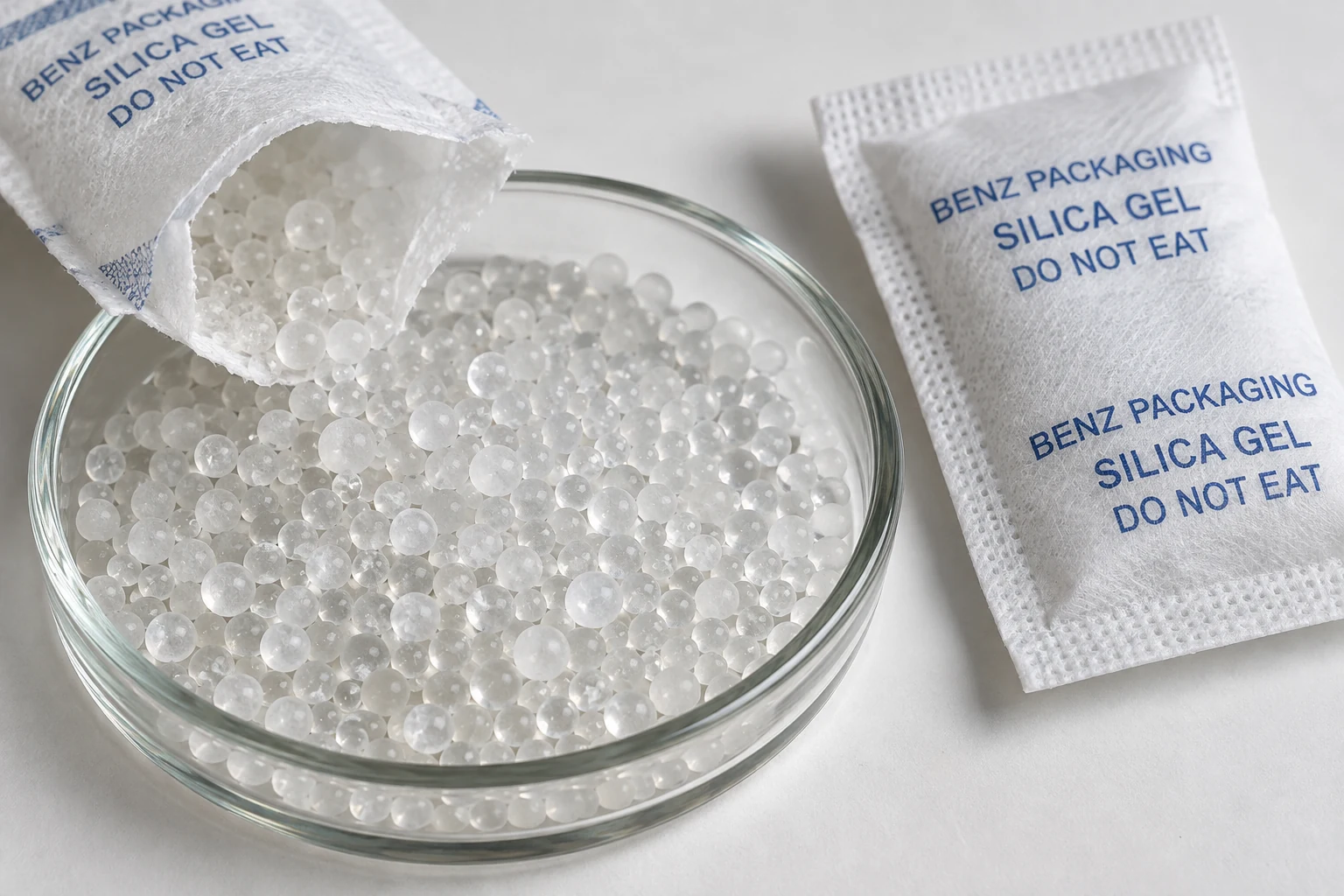 Silica gel sachet and porous silica beads
Separate the food pack from the freight container
Specify the material, pouch and food-contact conditions
State the food type, where the sachet will sit, whether contact can occur, and the temperature and duration of use. The material and finished pouch documentation must match that application and destination market.
Request the selected grade’s TDS, SDS, food-contact documentation and lot records through the enquiry form. The food-pack owner assesses the complete packaging system.
Size and validate the moisture-control system
Consider the product’s required moisture condition, headspace, barrier permeability and the planned storage period. Test the selected format in the actual package and use its results to define the packing and inspection process.
For food cargo such as coffee, cocoa or nuts, also assess starting cargo moisture and the surrounding transport packaging.
Frequently asked questions
Can every silica-gel sachet be called food safe?
Suitability is established for the selected silica grade, finished pouch and intended contact conditions. Request the relevant documentation for the food and destination market.
Which desiccant is used for coffee, cocoa or nuts in a shipping container?
Select a finished container product using cargo and packing moisture, route, duration and installation requirements. Keep the cargo’s own food packaging and food-contact requirements part of the assessment.
How is an in-pack food desiccant sized?
Use the food’s required moisture condition, pack headspace, barrier permeability and protection period, then validate the selected grade and dose in the actual packaging.